The job market has fundamentally shifted. Traditional degrees no longer guarantee career progression, while specialized digital skills command premium salaries, remote flexibility, and rapid career growth.
Whether you want to climb the corporate ladder, pivot to a remote role, or launch a lucrative freelance practice, updating your credentials with high-market-value capabilities is the fastest path forward.
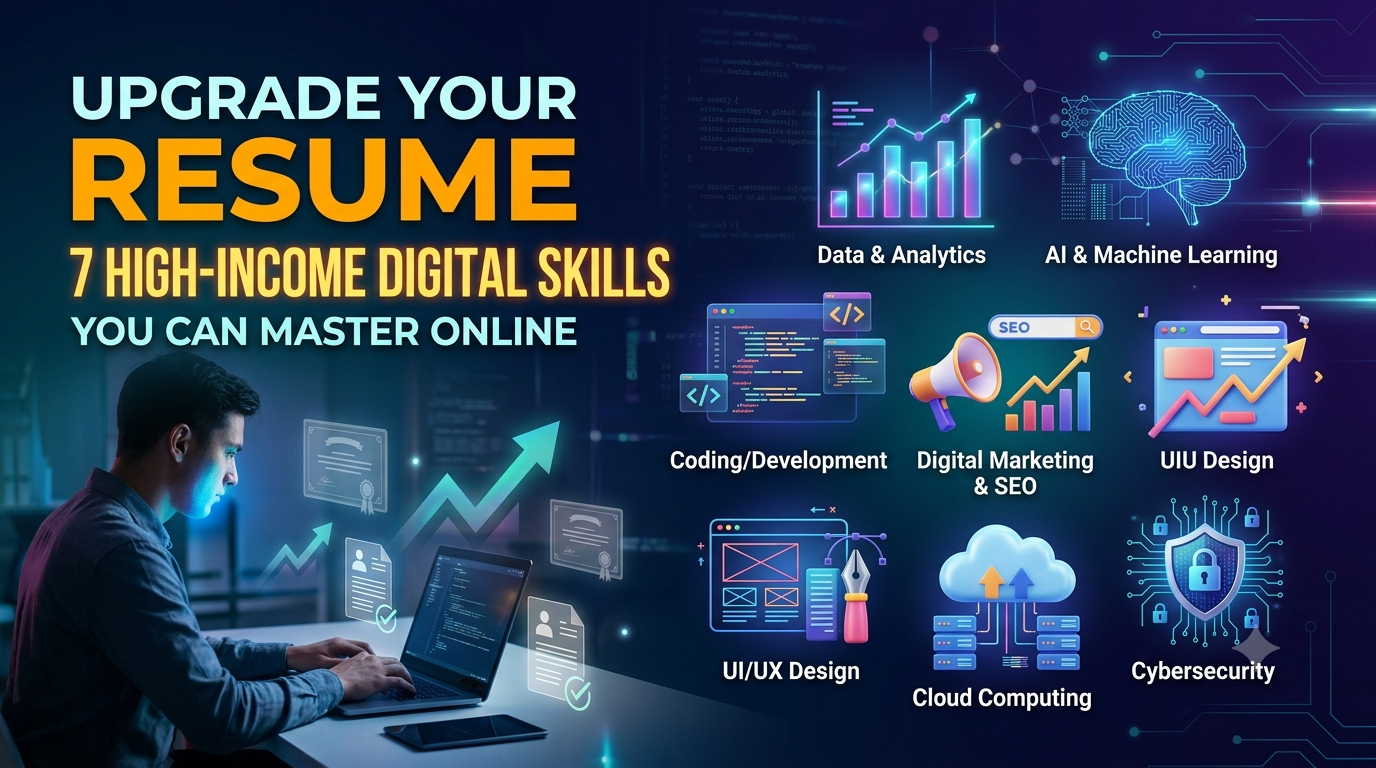
The best part? You don’t need to return to university to gain these capabilities. Here are 7 high-income digital skills you can master online, complete with average income expectations and free learning resources to get started.
High-Income Skills at a Glance
| Skill Area | Primary Focus | Best Free Platforms to Start | Average Annual Potential |
| 1. AI Prompting & Automation | Workflow automation, LLM orchestration | DeepLearning.AI, Coursera | $85,000 – $140,000+ |
| 2. Data Analytics | Business insights, SQL, Tableau, Python | Google Data Analytics, freeCodeCamp | $75,000 – $120,000+ |
| 3. UX/UI Design | Wireframing, Figma, user research | Figma Academy, YouTube | $80,000 – $125,000+ |
| 4. Cloud Computing | AWS, Azure, cloud architecture | AWS Free Tier, Microsoft Learn | $95,000 – $150,000+ |
| 5. Technical SEO & GEO | AI engine optimization, search visibility | HubSpot Academy, Google Skillshop | $70,000 – $115,000+ |
| 6. Full-Stack Web Dev | JavaScript, React, Node.js, API integration | freeCodeCamp, The Odin Project | $85,000 – $135,000+ |
| 7. Cybersecurity Basics | Threat analysis, network security, SecOps | Cybrary, Google Cybersecurity Cert | $90,000 – $145,000+ |
Deep Dive: The 7 Skills to Learn Today
1. AI Prompting & Workflow Automation

Businesses are eager to adopt Artificial Intelligence but often lack internal teams who know how to implement it effectively. Learning prompt engineering, workflow automation (using tools like Zapier or Make), and AI agent deployment positions you as an indispensable operations accelerator.
- Key Tools: ChatGPT/Gemini API, Zapier, Make, Python.
- Where to Learn: DeepLearning.AI (Prompt Engineering for Developers), Coursera.
2. Data Analytics

Companies are drowning in data but starving for actionable insights. As a data analyst, you bridge that gap by converting raw operational metrics into business growth strategies.
- Key Tools: SQL, Excel, PowerBI, Tableau, Python.
- Where to Learn: Google Data Analytics Professional Certificate (Coursera), Kaggle Tutorials.
3. Data Analytics

Digital products win or lose based on user experience. UX/UI designers craft intuitiveness into apps, SaaS platforms, and websites, ensuring higher conversion and retention rates.
- Key Tools: Figma, Adobe XD, Miro, Wireframe.cc.
- Where to Learn: Figma’s official YouTube channel, UX Design Institute free short courses.
4. Cloud Computing (AWS / Azure)

As enterprises migrate legacy infrastructure to the cloud, the demand for certified cloud architects and managers continues to outpace supply.
- Key Tools: Amazon Web Services (AWS), Microsoft Azure, Google Cloud Platform (GCP).
- Where to Learn: AWS Educate, Microsoft Learn for Azure Fundamentals.
5. Technical SEO & Generative Engine Optimization (GEO)

Search engine optimization is no longer just about ranking on Google; it’s about making content discoverable inside AI search models like Gemini and ChatGPT. Optimizing digital assets for conversational and traditional search commands high retainer rates from clients.
- Key Tools: Google Search Console, Ahrefs, SEMrush, Screaming Frog.
- Where to Learn: Google Analytics Academy, HubSpot Academy SEO Certification.
6. Full-Stack Web Development

Web sites and web applications remain core business assets. Full-stack developers—who manage both front-end user interfaces and back-end database logistics—stay high on recruiters’ priority lists.
- Key Tools: HTML/CSS, JavaScript, React, Node.js, SQL.
- Where to Learn: The Odin Project (100% free curriculum), freeCodeCamp.
7. Cybersecurity Fundamentals

With remote work and digital systems expanding, cyber threats are at an all-time high. Professionals who understand network security, risk assessment, and data protection protocols hold one of the most secure skill sets in tech.
- Key Tools: Wireshark, Linux/Bash, Metasploit, Nmap.
- Where to Learn: Cybrary, Google Cybersecurity Certificate.
How to Feature These Skills on Your Resume

- Focus on Outcomes, Not Just Terms: Avoid simply listing “Python” or “SEO.” Write: “Utilized Python scripts to automate internal report generation, saving 6 team-hours weekly.”
- Build a Portfolio: Create 2–3 public projects ( hosted on GitHub, Figma, or a personal website) to prove your competency.
- Earn Recognized Badges: Display certifications from Google, AWS, or HubSpot directly in your LinkedIn credentials section.
Ready to start? Pick one skill that aligns with your current strengths, commit 30 minutes a day to learning, and give your resume the upgrade it deserves.